
Finding Bowling Green Residents
Bowling Green is the Wood County seat, so a useful resident search often begins with a county office in town. Match the source to the question. An owned property points to the Auditor or Treasurer. A recorded transfer points to the Recorder. A specific registration question belongs with the Board of Elections. For a past household, a dated directory or newspaper is usually stronger than a present-day property screen. Each record keeps its own meaning, date, and limits.
Property records identify an owner of record and tax context, not every person at an address. A Recorder result identifies a party to a document, not necessarily a current resident. A voter lookup confirms a specific registration and polling-place relationship, not a street roster. Those distinctions prevent a match from becoming a claim the underlying record does not support.
- For an owned parcel, use the Auditor-linked property route or the Treasurer’s name, address, or parcel search and save the Parcel ID.
- Use the Parcel ID, legal description, or owner name in the Recorder index to locate the relevant recorded document.
- For a named civic confirmation, use the official voter lookup and contact the Board of Elections if a likely registration does not appear.
- For a former household, request a verified library directory or phone-book volume and compare it with a newspaper, census, map, or deed record.
- When the needed item is not online, make a focused request for a named government record under Ohio’s public-records law.
Note: Keep the date and custodian beside each result, since a matching name without those details can lead to the wrong person.
Bowling Green Records Offices
Three Wood County offices form the practical core of a Bowling Green residents directory search. The Recorder keeps instruments affecting land. The Auditor provides the property-record route, while the Treasurer documents tax-account searching by name, address, or parcel. The Board of Elections manages registration and election administration. Their public tools are different, and their counters remain important when a screen does not cover the period or record needed.
Wood County Recorder
1 Court House Square
Bowling Green, OH 43402
419-354-9140
AVA public document index
Wood County Auditor
One Courthouse Square, Second Floor
Bowling Green, OH 43402
419-354-9150
Wood County Board of Elections
One Courthouse Square
Bowling Green, OH 43402
419-354-9120
Recorder staff can explain book indexes, copy procedures, and how an instrument number or book and page identifies a document. The Auditor and Treasurer can resolve property-account questions. The Elections office is the correct fallback for a registration no-match or a voter-list request. For a parcel-by-parcel route along a named road, use the Bowling Green street directory rather than treating one property result as a whole-street list.
Parcel Records for Bowling Green Residents
Start an address question with the parcel, not a name match. The Auditor’s real-estate page leads to Wood County’s property-search route, and the Treasurer confirms searches by name, address, or parcel. An address search works best with the minimum house number and street name, omitting the street type if needed. Record the Parcel ID, property address, owner-of-record field, and legal-description clues before moving to land documents.
The official Wood County real-estate information page is the starting point shown below. The live Beacon form was blocked during research, so its unverified filters and result controls are not assumed here.
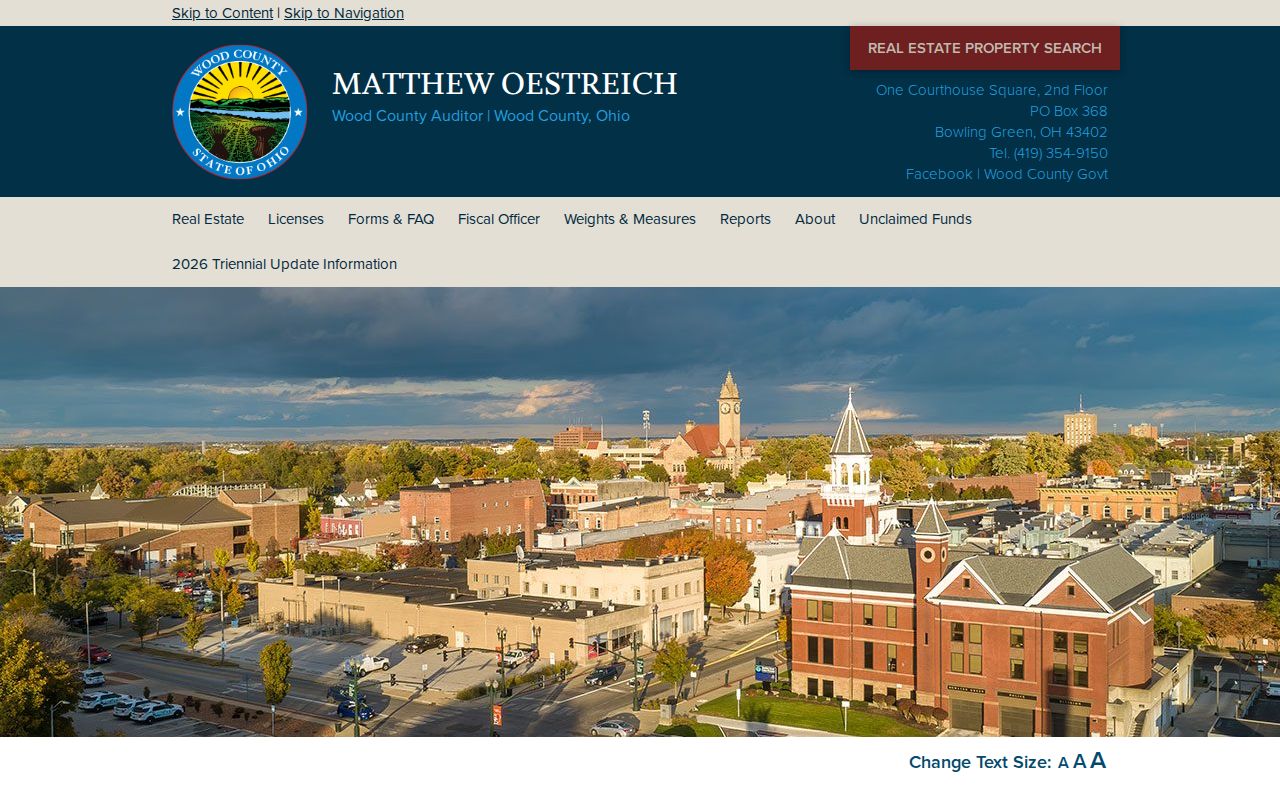
A property screen can show a mailing contact that differs from the property’s situs, or physical, address. The legal description, not the tax description printed on a map, is the land identity that connects a parcel to Recorder instruments.
- Parcel
- A county identifier for a piece of land or a property-account record.
- Situs address
- The physical street location used to locate a parcel in property and map systems.
- Legal description
- The lot, block, subdivision, or tract description used to identify land in recorded instruments.
- Mailing address
- A tax-contact field that can differ from the situs and does not establish a current physical residence.
Bowling Green Recorder Document Index
The Wood County Recorder’s AVA index is a party-and-document trail. Its electronic index begins in 1980, with displayed data normally delayed about one day from indexing. A result can show document number, document type, recorded date and time, Party 1, Party 2, and a legal summary. A detail view can add the document date, book and page, parcel, subdivision, tract, associated documents, and other record context when configured.
Use the Wood County AVA public index after obtaining a parcel or legal-description clue. Its present public configuration does not enable compiled address, municipality, reference-number, or quarter-quarter tabs. That makes AVA useful for a person’s document role or a parcel trail, but not a simple street-address residents directory.
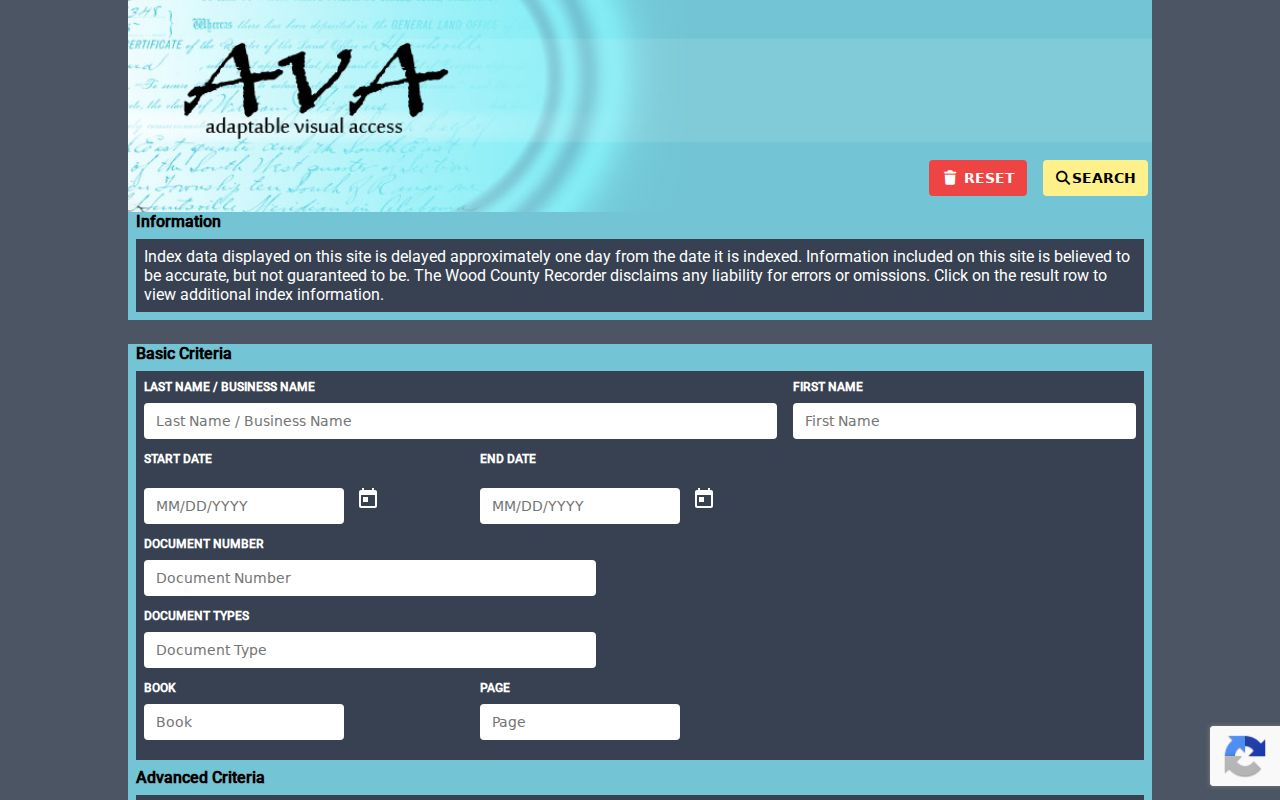
Older work follows a different channel: the Recorder identifies a Deed Index for 1821 through 1893 and Miscellaneous and Lease indexes for 1821 through 1969. AmeriScan Documents-On-Demand and the Recorder counter preserve the historic-book route, while Laredo is an account-request image service for higher-volume work.
| AVA field | Use | Local search note |
|---|---|---|
| Last or business name | Party-name route | At least one active criterion is required; wildcard searching is enabled. |
| First name and dates | Narrow a party result | Dates use MM/DD/YYYY and can be paired with a recorded-date range. |
| Document number, book, page | Find a cited instrument | Use the Recorder’s document or historic-book reference. |
| Parcel or subdivision | Follow land identity | Subdivision can be paired with lot and block. |
| Tract fields | Search land description | Section, township, range, and quarter are active; quarter-quarter is disabled. |
Note: A party name in AVA proves a documented role, not present residence, household membership, or ownership without reading the relevant record.
Current Bowling Green Resident Directories
No single official roll lists every person in Bowling Green. The useful current sources each describe a limited relationship: ownership, a specific voter registration, a recorded document, a court case, a city staff role, or a state credential. Use the source that can answer the exact question, then preserve its date and jurisdiction. An old status or mailing field should not be read as a current household fact.
| Official record route | Compiled people-search category |
|---|---|
| Names the custodian, record type, date, and access path, so a result can be checked at the source. | May combine records of uneven age and accuracy, so a result needs confirmation from the named government office or library. |
| Separates property ownership, voter registration, court dockets, and historical publications into their actual relationships. | Can blur separate relationships into a profile and cannot replace the underlying date, jurisdiction, or official copy. |
| Official source | Relationship shown | Keeper | Access and limit |
|---|---|---|---|
| Property and tax record | Owner of record, parcel, tax context | Auditor and Treasurer | Property route and counter; not all occupants. |
| Voter lookup | Specific registration and polling relationship | Board of Elections | Official lookup or formal request; protected data remain excluded. |
| Recorder AVA | Party to a recorded instrument | Recorder | Public index from 1980; party role is not residence proof. |
| Municipal staff directory | Public city office role | City of Bowling Green | Department contact route, not a private-person roll. |
| Ohio eLicense | Credential status or affiliation | Participating state boards | City or county shown in a credential record is not a home address. |
The Ohio eLicense portal offers a separate statewide credential route. It can search an individual by name, alias, board, license type or number, city, state, and county. Its results can show name, board, number, type, status, and location fields, but that is an official credential relationship rather than a private address claim.
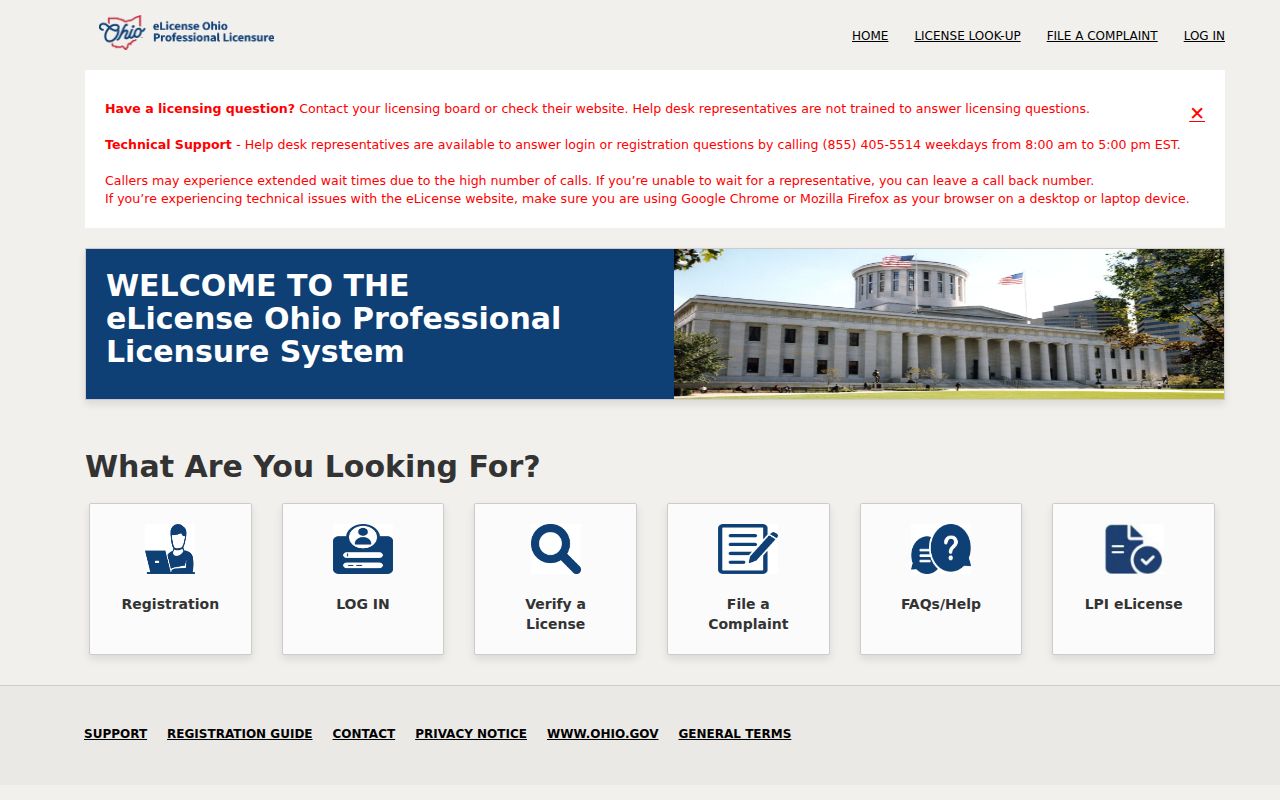
When one person needs careful verification, compare independent dated records rather than combining all screens into one profile. A name-first resident lookup should keep the property, court, voter, and historical sources separate until two dated records agree.
Bowling Green Voter Lookup
The Wood County Board of Elections maintains voter registration and provides a county Voter Look-up, a separate polling-place route, and a statewide Ohio lookup. Use these tools for a specific person’s registration or polling relationship. If an expected registration does not appear, the Board says to contact its office by phone or email. A no-match can reflect a spelling variation, name or address change, inactive or cancelled status, timing, or a protected record.
Ohio law separates available voter information from protected information. The Board’s list-and-labels route is the correct channel for a defined public request, with its listed formats and costs, rather than trying to infer a street-wide list from an individual lookup. Ballot choices are not public. Safe at Home participants and other protected information must remain protected.
Bowling Green Court and Probate Records
Court records answer a different question from a residents directory. Bowling Green Municipal Court uses GovRec for municipal criminal, traffic, civil, and related docket information. Its configured searches include criminal first and last name, citation, case number, court date, and filed date, plus civil party or business name and case or date routes. A result can supply case context, a party, a date, and a docket trail. Same-name matches require another independent identifier.
Wood County Common Pleas uses CourtView eServices, while its counter and copy route matter for material that is not online, including records before 1990. Probate offers a public name, case-number, and file-date search for estates, wills, guardianships, name changes, and marriage licenses. For older local material, its weekday public area has paper and electronic docket access, a public terminal, and a microfilm reader and printer. Sealed, juvenile, adoption, mental-health, and other protected material are not made public by a name search.
Note: A court docket records a case relationship and date, not a person’s current address or a complete account of private circumstances.
Bowling Green Vital Record Routes
Vital records have named local and state custodians. The Wood County Health Department issues Ohio birth certificates from 1908 forward and Wood County death certificates from 1908 forward. It offers counter, mail, and online VitalChek channels. Probate keeps Wood County historic birth and death material from 1867 through 1908, along with local marriage records. The Ohio Department of Health Vital Statistics office is the statewide route when the local path does not reach the event.
Certificates are not the same as a searchable index. Ohio Revised Code 3705.23 permits issuance on a signed application and fee unless a record has ceased to be public, while protecting birth medical or health data and limiting access to a decedent’s Social Security number for the first five years. For a family-history question, a probate file, cemetery result, obituary, or directory may be a helpful lead, but it does not replace the certificate process.
Bowling Green Cemetery Name Records
For a historical name trail, Wood County’s local resources include more than land and court files. The Wood County Genealogical Society’s searchable cemetery collection covers 55 cemeteries and reports 99,203 records. Its cemetery search requires a name in Last or Last, First form and can display name, spouse, cemetery, remarks, tombstone links, and cemetery directions. That makes it a local memorial and kinship lead, not proof of a present address.
BGSU’s Center for Archival Collections also identifies a Bowling Green cemetery lot-owner index and cemetery deeds for 1907 through 1921. Compare a cemetery result with a dated obituary, estate file, directory, or newspaper before drawing a family conclusion. The source can clarify where to ask next without filling in facts that are not in the record.
Bowling Green ZIP Labels
Postal labels help validate an address, but they do not define a residents directory. Bowling Green uses 43402 for ordinary civic and postal addresses. Bowling Green State University uses unique ZIP 43403, and its postal service says mail bearing that ZIP is delivered to campus. Neither label identifies city limits, parcel ownership, voting jurisdiction, or a neighborhood boundary.
Use the USPS address lookup for a mailing ZIP. Use a parcel map, legal description, city-limit map, or Planning confirmation for a jurisdiction question. A Bowling Green mailing label can reach beyond a municipal boundary, and a later annexation does not automatically change the postal delivery geography. This distinction is especially important near city edges and for BGSU-related addresses.
Historical Bowling Green Resident Directories
Wood County District Public Library is the local shelf for Bowling Green phone books, city directories, high-school yearbooks, census material, family histories, and historical newspapers. Its catalog confirms 1897 and 1914 Bowling Green city-directory volumes, while the Ohio Genealogical Society lists selected volumes from 1966 through 1997 and Cleveland Public Library has separate microfilm for 1930 and 1947 through 1959. Those are separate holdings, not a promise of a complete annual run.
The WCDPL Local History and Genealogy collection provides the local library route shown below. The historical archive room may require staff retrieval, so ask reference staff for a specific volume or catalog item instead of assuming every source is open on a shelf.
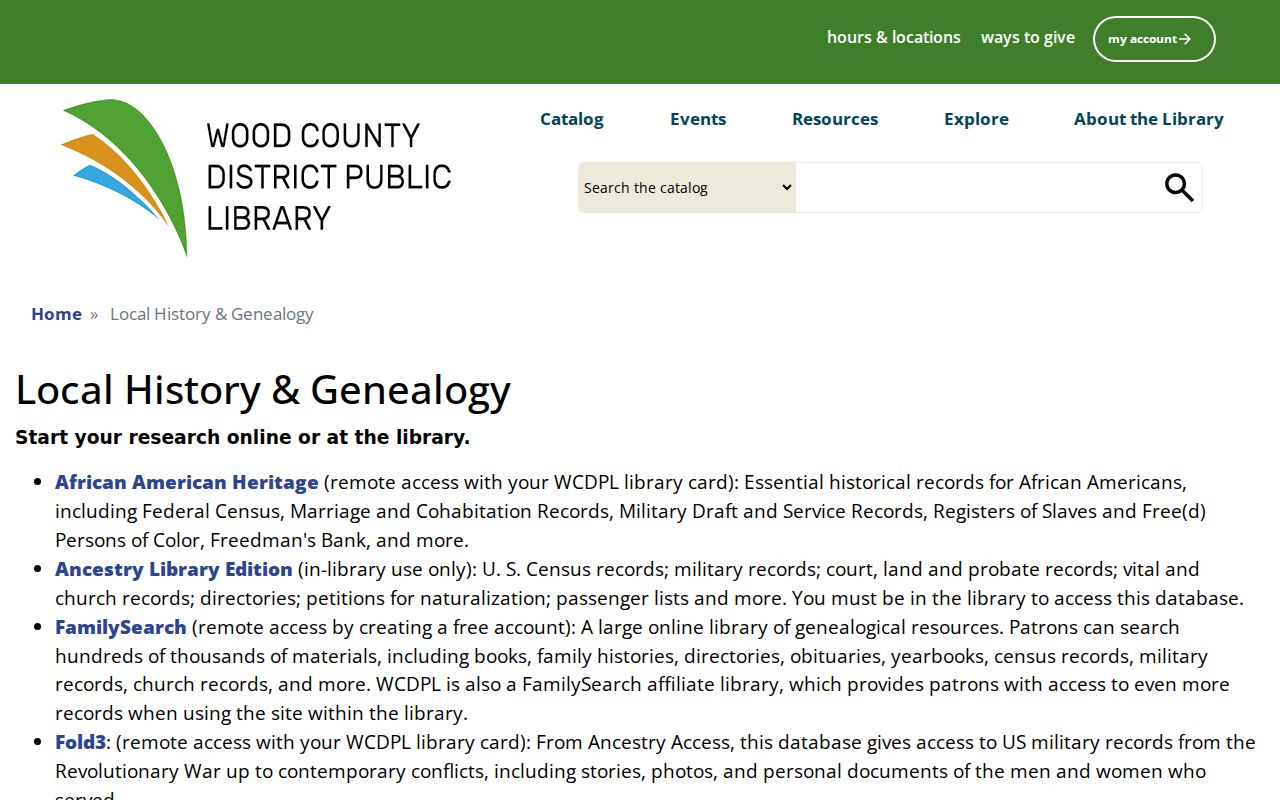
A directory entry has to be read in the original volume. The research did not verify a digitized local sample entry, a local abbreviation key, or a full reverse-directory run. Confirm the actual labels, names, address notation, and any ownership mark before relying on an entry. More directory-year detail belongs with the Bowling Green city directory collections.
Bowling Green Archives Keep Layers
Bowling Green’s historical trail is split by custodian and era. Wood County was established in 1820, and BGSU’s local-government inventory identifies Common Pleas journals from 1820 through 1935, Probate marriage records from 1820 through 1950, tax duplicates from 1827, and Recorder material described as circa 1817 through 1855. Later municipal series include council ordinances and resolutions from 1869, council minutes from 1911, and cemetery deeds from 1907 through 1921.
The modern cutoffs are not creation dates. The Recorder’s electronic index starts in 1980, Common Pleas warns that pre-1990 records may not be online, and Probate says online records before 1994 can be incomplete. Older municipal material may be at BGSU’s Center for Archival Collections; local directories, newspapers, maps, and family-history tools are held through WCDPL and WCOGS. That layered arrangement is the documented local records story.
Bowling Green Public Record Limits
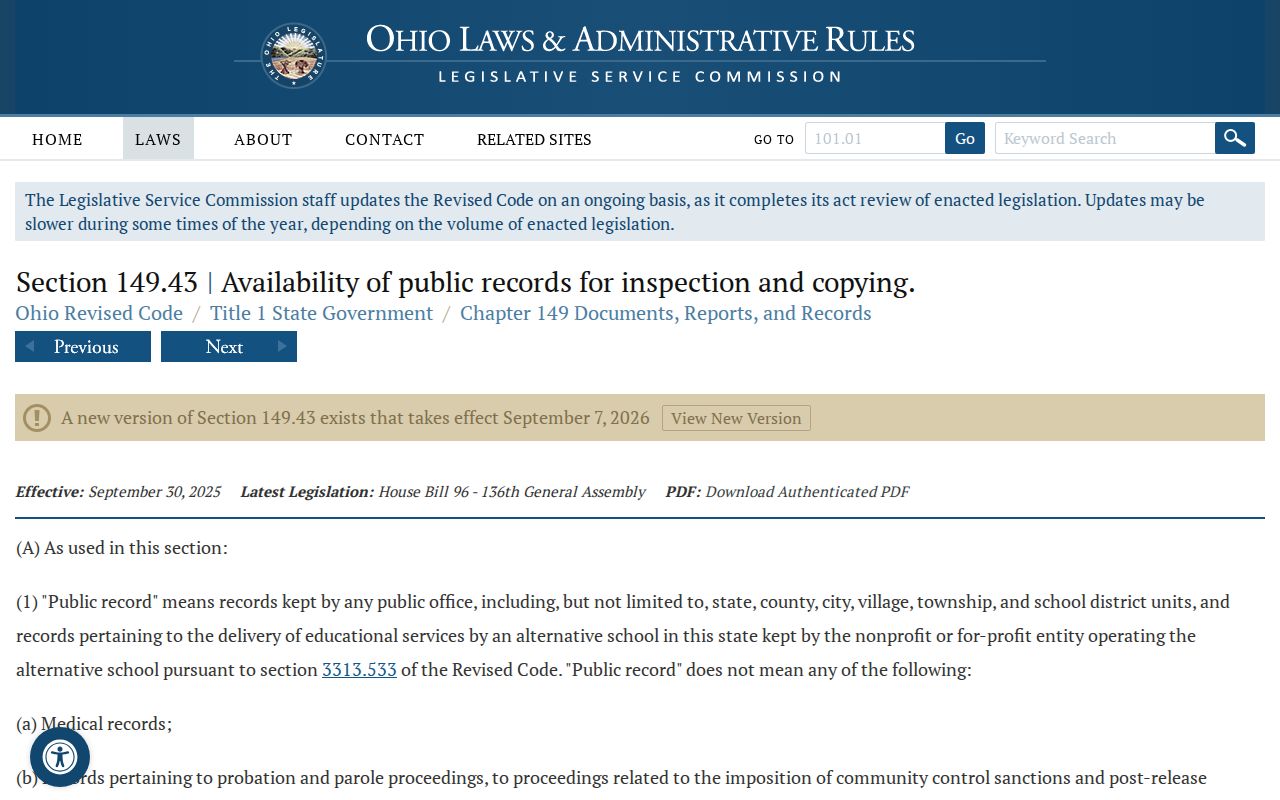
Ohio’s Public Records Act, R.C. 149.43, makes inspection and copies available from public offices subject to exemptions. A focused request can name the record, date, address, or project when an online portal lacks the needed item. The office may redact protected information or deny an exempt record with the legal reason. Medical records, protected personal information, sealed court material, juvenile and adoption material, confidential investigative records, and Safe at Home information are not ordinary public lookup material.
The official Ohio Public Records Act text frames access around a defined government record, not a broad search for private household details.
Ohio’s Safe at Home program can use a substitute address for qualifying participants, including voter and government correspondence, and can protect certain later-acquired residence information when its statutory process is followed. A missing or substituted result is an endpoint, not a reason to seek a protected address.
The Ohio Department of Rehabilitation and Correction offender search is a separate official status tool. It is not a resident list, and a displayed residential county or ZIP can lag behind current circumstances.
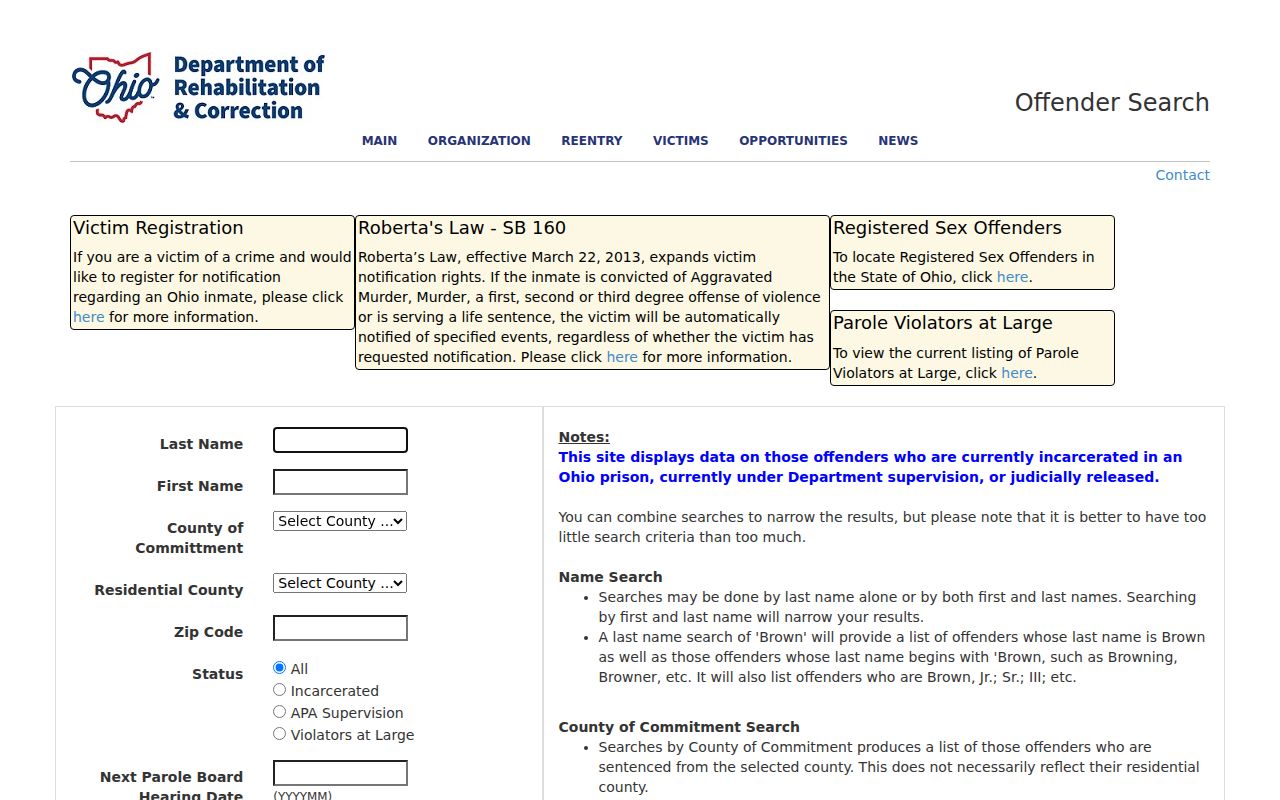
Use the agency’s current status display only for its stated public-safety purpose, and verify significant information with the responsible agency or court. An older result should never be treated as a current location statement.